

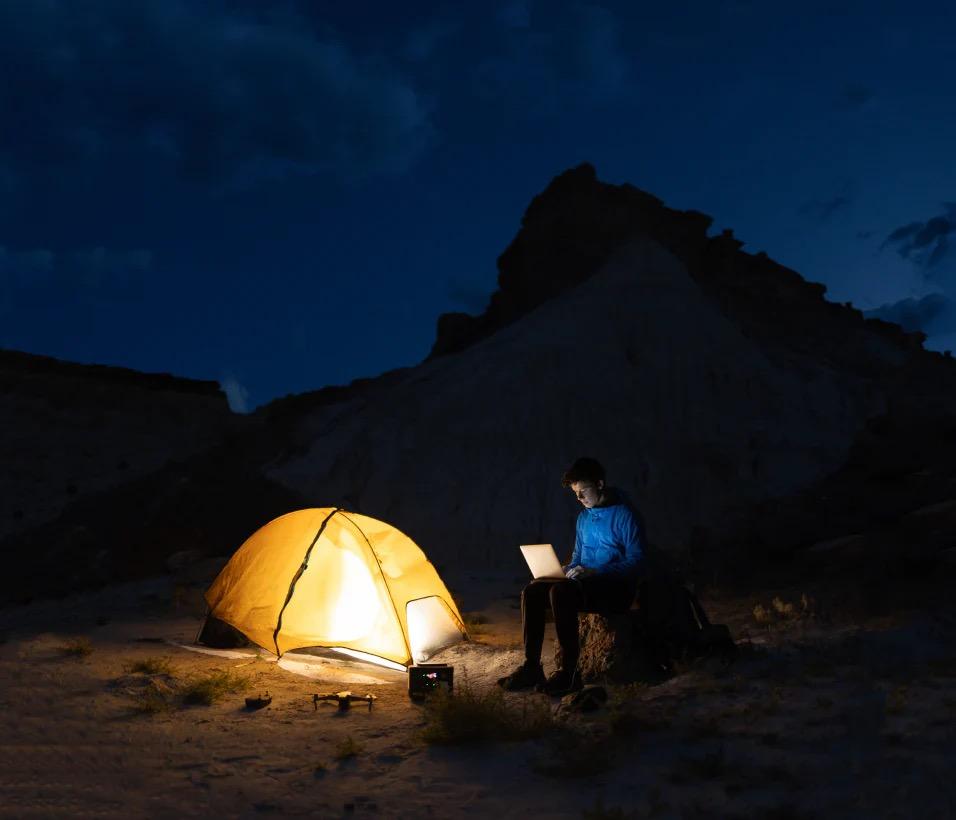
As summer approaches in Australia, many people look for reliable power — for camping, for a backyard barbecue, or as backup when heatwaves cause blackouts. The original version of this post was short (718 words) and built on a garbled idea: “oil power generators” versus inverter generators. “Oil” is not a generator type. The real choice is conventional vs inverter generators, and both usually burn petrol. Here is the corrected guide.
Conventional vs Inverter Generators
| Conventional (open-frame) | Inverter | |
|---|---|---|
| How it works | Engine drives an alternator directly at fixed speed | Engine → AC → DC → clean AC (pure sine wave) |
| Power quality | Voltage/frequency can fluctuate under load | Stable, <3% distortion — safe for laptops and phones |
| Noise | ~70–75+ dB at 7 m | ~50–60 dB at 7 m (conversation level) |
| Fuel use | Runs at full speed even under light load | Engine speed varies with load (eco-throttle) |
| Weight | Heavier, bulkier | Lighter, more portable |
| Max output | Higher (up to 10 kW+) | Lower (usually up to ~3 kW; can parallel two units) |
| Price (AUD) | ~A$500–$2,000 | ~A$800–$3,000 for 2–3 kW |
Conventional generators suit heavy-duty work: power tools, construction sites, and whole-home backup, where wattage matters more than noise or power quality.
Inverter generators suit camping and sensitive electronics: phones, laptops, CPAP machines, and small fridges. They are quieter, lighter, and sip fuel — but they cost more per watt and top out at lower outputs.
How to Size a Generator
Add up the running watts of everything you will power, then add the starting watts of the largest motor-driven appliance (fridges and air conditioners need 2–3× their running watts to start):
- Phone charger: ~10W
- Laptop: ~60W
- Portable fridge: ~700W running / ~2,000W starting
- Small air conditioner: 2,000–3,000W+ to start
- Power drill: ~600–800W
Buy a generator rated above your total starting watts. If you are between sizes, go bigger — an overloaded generator stalls, and the voltage drop can damage appliances.
Safety: Read This Before You Buy
- Never run a petrol generator indoors, in a garage, or near open windows. Carbon monoxide is odourless and kills. Keep the generator at least 6 metres from the house, exhaust pointing away.
- Never backfeed into your home wiring without a transfer switch installed by a licensed electrician — it can kill line workers repairing the grid.
- Let it cool before refuelling. Petrol on a hot engine is a fire risk.
- Store petrol safely — it goes stale in 3–6 months; use fuel stabiliser and keep it in an approved container, away from the house.
- Check fire rules. During bushfire season, total fire bans can restrict generator use, and national parks and campsites have noise rules and quiet hours.
A Third Option: Portable Power Stations
Power generators are not the only option. A portable power station is a battery you charge from the wall, your car, or solar panels — silent, with no fumes, and usable indoors. The trade-off is capacity: a small unit like the Jackery Solar Generator 300 Plus (288Wh, 300W output) charges phones and laptops and runs a small 12V portable power station fridge for a few hours — but it will not run an air conditioner or a power tool. For camping, that is often enough; for home backup, it is not.
Which One for an Australian Summer?
- Camping and caravanning: an inverter generator (2–3 kW) or a portable power station. Quiet, light, and safe for electronics.
- Home backup during blackouts: a conventional generator (5 kW+) with a transfer switch, or a large inverter unit — sized to your fridge, lights, fans, and phone charging.
- Work sites and power tools: a conventional generator for the wattage.
The Bottom Line
Forget “oil vs inverter” — the choice is conventional vs inverter, and it comes down to wattage versus noise and power quality. Size it above your starting watts, never run it indoors, and check fire and noise rules before you take it camping. For light camping loads, a portable power station is the silent, fume-free alternative.
Visit our Tech category for more tech guides.
Frequently Asked Questions (FAQs)
What is the difference between a conventional and an inverter generator?
A conventional generator drives an alternator directly at fixed speed; an inverter generator converts its output to DC and back to clean AC, giving stable power safe for electronics, with variable engine speed for lower noise and fuel use.
What size generator do I need?
Add up running watts, then add the starting watts of your largest motor appliance (fridges and air conditioners need 2–3× running watts to start). Buy a generator rated above that total.
Can I run a generator indoors?
No — never indoors, in a garage, or near open windows. Carbon monoxide is odourless and kills. Keep it at least 6 metres from the house.
Are inverter generators safe for laptops and phones?
Yes — they produce a pure sine wave with <3% distortion, safe for sensitive electronics. Conventional generators can damage them.
What is a portable power station?
A battery you charge from the wall, car, or solar panels. Silent and fume-free, but limited in capacity — a 288Wh unit runs small devices and a portable fridge for a few hours, not an air conditioner.
