

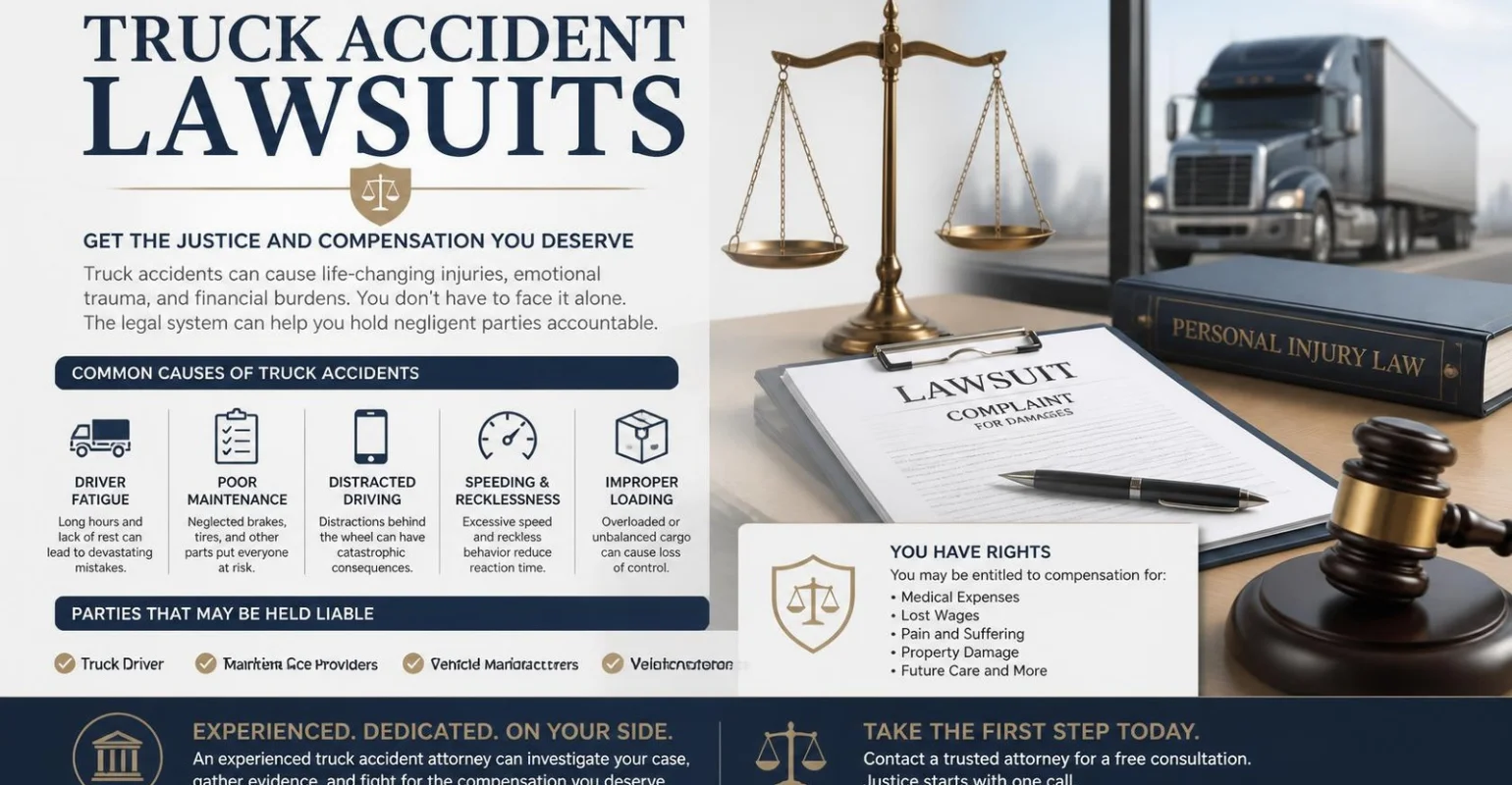
A truck accident lawsuit can involve more than the driver who caused the crash. Depending on the facts, a claim may involve a trucking company, vehicle owner, freight broker, cargo loader, maintenance provider, or another responsible party. If you are considering a truck accident lawsuit, understanding liability, evidence, deadlines, damages, and settlement options can help you take the next step.
Quick Answer
A truck accident lawsuit is a civil case seeking compensation after a collision involving a commercial truck. Potential defendants can include the driver, trucking company, vehicle owner, freight broker, cargo loader, or maintenance company. The case usually depends on proving negligence, identifying responsible parties, preserving evidence, documenting losses, and meeting the applicable state filing deadline.
Key Facts at a Glance
| Question | U.S. answer |
| Who can be sued? | Potentially the driver, carrier, owner, broker, loader, maintenance provider, or other responsible party |
| What must you prove? | Usually negligence, causation, and legally recoverable damages |
| What evidence matters? | Police reports, medical records, photos, witnesses, ELD data, maintenance records, cargo records, and vehicle data |
| How long do you have? | The deadline varies by state and claim type |
| Can you settle without court? | Yes, many cases resolve through insurance negotiations |
| What damages may apply? | Medical costs, lost income, future losses, pain and suffering, and other legally recognized losses |
| Is a lawyer required? | No, but complex truck cases often involve multiple parties and specialized evidence |
Key Takeaways
- A commercial truck crash can create claims against several parties.
- Federal trucking rules can provide important evidence about driver and carrier conduct.
- Electronic logging device data may help establish driving and duty patterns.
- Filing deadlines depend on the state and specific circumstances.
- Settlement is possible without taking the case through trial.
- Damages depend on the injuries, financial losses, and applicable state law.
- Early evidence preservation can matter because some records are controlled by other parties.
Who Can Be Liable After a Truck Accident Lawsuit?
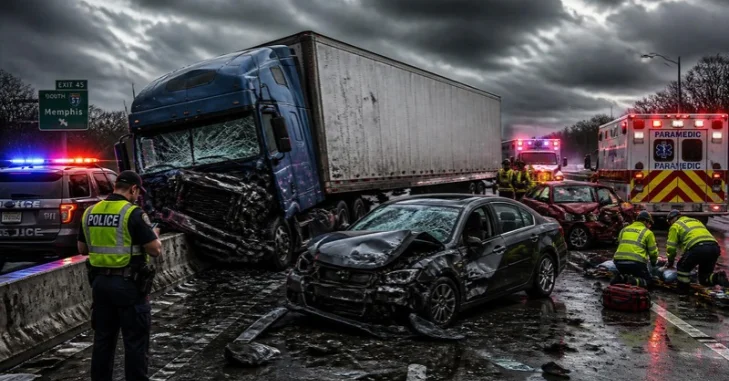
The truck accident lawsuit driver is often an important defendant, but the investigation should not stop there. A driver may have caused the collision through speeding, distraction, unsafe lane changes, fatigue, impairment, or another negligent act. The facts may also show that another business contributed to the crash.
A trucking company may face liability when its employee causes a crash while performing work duties. A company may also face separate allegations involving hiring, supervision, training, maintenance, or other conduct. The exact legal theory depends on the employment relationship and the facts established by the evidence.
Other potential defendants can include the truck owner, freight broker, cargo loader, maintenance company, or manufacturer. For example, improperly secured cargo can create a different liability question from negligent driving. A defective component may also create a product-liability claim rather than a simple negligence claim. Because trucking companies are businesses, it can help to understand what a business attorney does and when companies hire one, since that often shapes how they respond to a claim.
Recent federal case law can matter when a freight broker is involved. In 2026, the U.S. Supreme Court addressed whether federal law preempts certain state-law negligence claims against freight brokers involving negligent selection or hiring. That decision does not make brokers automatically liable, so the specific facts still matter.
What Evidence Do You Need?
Evidence can determine whether a claim can be proven and which parties should be investigated. Truck cases can involve records that are not normally available in a standard passenger-vehicle collision. Some of those records may be held by the trucking company, driver, insurer, or another business.
Useful evidence may include:
- The police or crash report.
- Photographs and videos from the collision scene.
- Medical records and treatment bills.
- Witness names and contact information.
- Vehicle damage photographs and repair records.
- Employment and income records.
- Electronic logging device information.
- Driver qualification and training records.
- Truck inspection and maintenance records.
- Cargo loading and shipping records.
- Available surveillance or traffic-camera footage.
Federal hours-of-service rules regulate driving and duty periods for covered commercial drivers. For property-carrying drivers, federal rules generally limit driving to 11 hours after 10 consecutive hours off duty and restrict driving after the 14th consecutive hour on duty. Exceptions can apply, so the specific operation and applicable regulation should be reviewed.
Electronic logging devices can also provide useful information. FMCSA explains that ELDs can automatically record information such as time, location, engine hours, vehicle miles, driver identification, and carrier identification. Those records may become relevant when fatigue or hours-of-service compliance is disputed.
Truck Accident Lawsuit: What Is the Filing Process?
A lawsuit usually begins after an investigation and an assessment of the potential claims. You may first pursue an insurance claim or negotiate with the responsible parties before filing in court. If negotiations do not resolve the dispute, the formal lawsuit process can begin.
1. Identify the Potentially Responsible Parties
Start by determining who owned, operated, maintained, loaded, or dispatched the truck. The investigation should also consider the driver’s employment status and the relationships between the trucking company, broker, shipper, and other businesses. Naming the wrong party can complicate recovery, so liability should be investigated carefully.
2. Preserve Important Evidence
Ask the relevant parties to preserve records that may become evidence. An attorney may send a preservation or spoliation letter identifying electronic data, maintenance records, driver logs, inspection materials, photographs, and other information that should not be destroyed. Early action can matter because evidence can become harder to obtain as time passes.
3. Document Your Injuries and Financial Losses
Keep records of medical treatment, prescriptions, rehabilitation, transportation costs, and related expenses. If the crash affects your ability to work, retain pay records and documentation showing missed work or reduced earning capacity. These records can help establish the financial effect of the accident.
4. File the Complaint
If a lawsuit becomes necessary, the plaintiff generally files a complaint with the appropriate court. The complaint identifies the defendants, describes the alleged facts, states the legal claims, and requests available relief. The defendants must then be formally served and given an opportunity to respond.
5. Complete Discovery and Negotiations
After the lawsuit begins, both sides may exchange documents, written questions, and other evidence. Depositions may also occur, allowing attorneys to question witnesses under oath. Settlement negotiations can continue during this stage.
6. Resolve the Case or Go to Trial
A case may end through a negotiated settlement, dismissal, judgment, or trial verdict. If the parties cannot agree, the court may conduct a trial where the evidence and legal arguments are presented. The result depends on the facts, applicable law, and court process.
How Long Do You Have to File?
There is no single nationwide deadline for every truck accident lawsuit. Personal-injury statutes of limitations are generally established by state law, and the period can differ based on the state, claim type, defendant, and circumstances.
The deadline can also change when a government entity is involved. Government claims may have additional notice requirements or shorter deadlines in some jurisdictions. A wrongful-death case can also follow rules that differ from a standard personal-injury claim.
Because missing a filing deadline can seriously affect your legal rights, identify the applicable state law early. Do not assume that a deadline from another state applies to your case. A lawyer licensed in the relevant jurisdiction can evaluate the specific limitation period and any exceptions.
What Compensation Can You Seek?
Damages depend on the injury, financial impact, evidence, and applicable state law. There is no reliable nationwide settlement figure that applies to every truck crash. Two collisions involving similar vehicles can produce very different legal outcomes.
Potential damages may include:
- Emergency and ongoing medical expenses.
- Rehabilitation and future medical treatment.
- Lost wages and reduced earning capacity.
- Property damage.
- Physical pain and suffering.
- Emotional or psychological harm where legally recoverable.
- Loss of normal activities or enjoyment of life.
- Wrongful-death damages for eligible surviving family members.
Future losses can require careful documentation. For example, a serious injury may affect your ability to perform the same job or work the same number of hours. Expert testimony or financial evidence may become relevant when future earning capacity or long-term medical needs are disputed.
Should You Settle or File a Lawsuit?
A settlement can resolve a truck accident claim without a trial. The parties may negotiate directly, through insurance representatives, or through attorneys. A settlement can occur before a lawsuit is filed or after litigation begins. If a settlement still leaves unpaid bills, you can read about how a debt settlement attorney approaches that problem.
Filing a lawsuit does not automatically mean the case will reach trial. Many civil injury disputes settle during negotiations or discovery. The decision to accept an offer should consider the documented losses, disputed liability, available insurance, future medical needs, and the risks of continued litigation.
Do not evaluate an offer based only on the amount of the check. A settlement can also affect future claims, medical liens, expenses, and other rights depending on its terms. Before signing a release, understand what claims you are giving up and whether the agreement resolves the entire dispute.
When Should You Hire a Truck Accident Lawyer?
A lawyer may be especially useful when the crash involves serious injuries, disputed fault, several potential defendants, commercial insurance, or complex evidence. Trucking companies and insurers may have their own investigators and legal representatives working soon after a serious collision. Having professional assistance can help organize the evidence and identify the legal issues that matter.
Legal representation can also help with evidence that you cannot easily obtain yourself. ELD records, maintenance files, driver qualification materials, inspection documents, and company records may require formal requests or litigation tools. An attorney can determine which records are relevant and how they may support or weaken a claim.
What Should You Do After a Truck Accident?
Your first priority should be medical care and immediate safety. Once you can safely do so, preserve information that may help establish what happened and how the crash affected you.
Consider these practical steps:
- Seek appropriate medical attention.
- Report the collision as required.
- Photograph vehicles, road conditions, and visible injuries.
- Collect witness contact information.
- Keep medical and expense records.
- Save insurance correspondence.
- Avoid guessing about fault when speaking publicly or to insurers.
- Preserve photographs, videos, messages, and other relevant material.
- Consider speaking with a qualified attorney before giving a detailed recorded statement.
Do not attempt to investigate dangerous crash scenes yourself. If evidence is located on or around a commercial vehicle, roadway, or business property, trained investigators can handle evidence collection more safely. Your own records should focus on preserving information you already lawfully possess.
Take the Next Step Carefully
A commercial truck collision can raise legal questions that are more complicated than a typical passenger-vehicle crash. Multiple businesses may have information or potential responsibility, while important evidence can sit outside the injured person’s control. Acting early can help preserve records and clarify which claims may be available.
If you are considering a truck accident lawsuit, gather your crash, medical, employment, and insurance records before making major decisions about settlement. Because filing deadlines and liability rules vary by state, consider getting advice from a qualified attorney in the jurisdiction where the claim will be pursued.
Frequently Asked Questions
What is a truck accident lawsuit?
A truck accident lawsuit is a civil action seeking compensation for injuries, losses, or death connected to a commercial truck collision. The claim may target the driver, trucking company, or other parties whose conduct contributed to the crash. The legal theories and available damages depend on the applicable jurisdiction and evidence.
Who can I sue after a truck accident?
Potential defendants can include the truck driver, trucking company, vehicle owner, freight broker, cargo loader, maintenance company, or manufacturer. Not every case supports claims against every party. Liability must be established from the facts, contracts, employment relationships, regulations, and available evidence.
How much is a truck accident lawsuit worth?
There is no standard nationwide value for a truck accident case. Compensation depends on injury severity, medical expenses, lost income, future losses, property damage, non-economic damages, liability, insurance coverage, and state law. A lawyer can evaluate those factors using the specific evidence in your case.
How long does a truck accident lawsuit take?
The timeline varies widely. A claim may settle before a lawsuit is filed, while a filed case can continue through discovery, negotiations, motions, and trial preparation. The complexity of the injuries, number of defendants, evidence disputes, court schedule, and willingness to settle can all affect the timeline.
Do truck accident cases usually go to trial?
Not necessarily. Many injury disputes resolve through settlement negotiations before trial, although the timing and likelihood of settlement vary by case. A lawsuit can proceed through discovery and negotiation while the parties continue discussing resolution.
What evidence can prove truck driver negligence?
Evidence may include crash-scene photographs, witness accounts, vehicle data, ELD information, inspection records, maintenance documents, driver records, video footage, and police reports. Federal hours-of-service rules can also become relevant when fatigue or excessive driving is alleged. The evidence must connect the driver’s conduct to the collision and resulting damages.
