

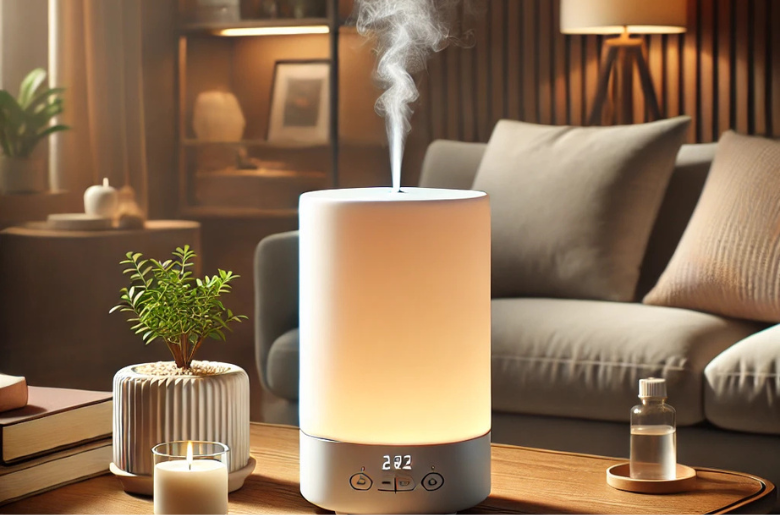
Electric room diffusers have become essential devices in many homes, dispersing essential oils into the air to make a room smell good and feel calmer. The original version of this post was a decent guide — but it claimed diffusers “improve air quality” (they do not), overstated the health benefits, and barely mentioned the real safety issues: several common oils are toxic to cats and dogs, and birds should never be in a room with a running diffuser. Here is the corrected guide. Elsewhere on the site: Best Tailgate Grill.
What a Diffuser Can and Can’t Do
A diffuser can: make a room smell pleasant, add a little humidity (ultrasonic models), and — for some people — help them relax. Lavender, for example, has some evidence behind it for sleep quality.
A diffuser cannot: purify the air, remove allergens, or improve air quality. It adds fragrance; it does not filter anything. And the health claims made for aromatherapy are mostly unproven — treat “therapeutic benefits” as marketing, not medicine.
Types of Electric Room Diffusers
Ultrasonic diffusers use high-frequency vibrations to create a mist from essential oils and water. They are the most popular type: quiet, and they double as small humidifiers. Best for bedrooms and living rooms.
Nebulizing diffusers use air pressure to create a fine mist of pure essential oil — no water. They give the strongest scent and are best for large or open spaces, but they consume oil much faster than other types.
Evaporative diffusers blow air through a wick soaked with essential oil. As the air passes through, the oil evaporates, dispersing the fragrance. Simple and efficient, but scent intensity varies with humidity.
Heat diffusers use heat to evaporate essential oils. They are simple and often the cheapest, but heat can alter the oil’s scent.
Smart diffusers connect to Wi-Fi or Bluetooth and can be controlled by an app or voice assistant, with scheduling and customisable settings.
Features to Consider
- Size and capacity: 100–200 ml suits a small room (~100–200 sq ft); 300–500 ml suits a larger room.
- Mist output: adjustable settings, steady or intermittent.
- Timer: set it for 1, 2, or 4 hours to conserve oil and energy.
- LED lighting: often with customisable colours or a nightlight option.
- Noise level: ultrasonic diffusers are the quietest — important for bedrooms.
- Auto shut-off: essential — it switches the diffuser off when the water runs low.
Top Picks for Your Home
- doTERRA Petal 2.0 — the favourite of essential-oil enthusiasts. 150 ml capacity, multiple mist settings, built-in timer, runs up to 4 hours. ~$45–$60.
- VicTsing Essential Oil Diffuser — affordable, with a stylish wood-grain design. 400 ml capacity, seven LED colour options, quiet ultrasonic operation, auto shut-off. ~$20–$30.
- InnoGear Aromatherapy Diffuser — compact and versatile, perfect for small spaces. 200 ml capacity, multiple mist modes, colour-changing LED. ~$15–$25.
- URPOWER Essential Oil Diffuser — 300 ml capacity, runs up to 10 hours on low mist, seven colour options, timer. ~$20–$30.
- Syntus Essential Oil Diffuser — 400 ml capacity, quiet ultrasonic operation, adjustable mist settings, modern design. ~$20–$30.
Prices are approximate 2026 ranges; several of these are generic brands whose availability changes — check before buying.
How to Use a Diffuser
- Choose quality oils: buy 100% pure essential oils from reputable brands. Avoid “fragrance oils” — they are synthetic.
- Follow the instructions: read the manufacturer’s guidance on water and oil ratios (usually 3–5 drops per 100 ml of water).
- Clean regularly: empty the tank after each use, wipe it with a vinegar-water mix, and deep-clean weekly. Never let water sit in the tank — it breeds mould and bacteria.
- Experiment with blends: lavender and chamomile for relaxation; citrus and peppermint for energy.
- Place it well: on a raised surface in a central area, so the mist circulates evenly.
Safety: Read This Before You Diffuse
This is the part the original barely covered, and it matters more than the features:
- Pets: several common oils are toxic to cats (tea tree, eucalyptus, citrus, peppermint, ylang ylang, pine) and dogs (tea tree, pennyroyal, wintergreen). Always diffuse in a ventilated room and give pets a way to leave. Never diffuse in a room with a bird — birds are extremely sensitive to airborne chemicals.
- Children: avoid peppermint and eucalyptus around children under 3 (some guidance says under 6–10) — the compound 1,8-cineole can cause breathing problems.
- Pregnancy: avoid certain oils (clary sage, rosemary, juniper, wintergreen) and check with a doctor first.
- Asthma: diffused oils can trigger attacks. If you have asthma, avoid diffusing or use it only briefly in a ventilated room.
- Never ingest essential oils, and never apply undiluted oils to skin.
- Use in a well-ventilated area and do not overdo the oil — too much can cause headaches.
The Bottom Line
An electric diffuser is a pleasant way to scent a room and add a little humidity — nothing more, and nothing less. Buy an ultrasonic model for a bedroom (quiet, 100–200 ml), a nebulizing model for a large space, and always check the safety rules for pets, children, and asthma before you switch it on.
Apart from that if you want to know about “Best Tower Fans to Help You Keep Cool, Breezy, And Happy During Summers” then please visit our “Tech” Category.
Frequently Asked Questions (FAQs)
How does an electric room diffuser work?
Ultrasonic diffusers use vibrations to turn water and oil into a fine mist; nebulizing diffusers use air pressure on pure oil; heat diffusers evaporate oil with warmth; evaporative diffusers blow air through an oil-soaked wick.
Do diffusers improve air quality?
No. They add fragrance (and, for ultrasonic models, humidity). They do not filter the air or remove allergens.
Are essential oils safe for pets?
Not all of them. Several common oils are toxic to cats and dogs, and birds should never be in a room with a running diffuser. Always diffuse in a ventilated room and give pets a way to leave.
Can I use a diffuser around children?
Avoid peppermint and eucalyptus around children under 3 (some guidance says under 6–10). Check with a paediatrician if in doubt.
How often should I clean my diffuser?
Empty it after each use and deep-clean weekly with a vinegar-water mix. Never let water sit in the tank.
What size diffuser do I need?
100–200 ml for a small room (~100–200 sq ft); 300–500 ml for a larger room.
