

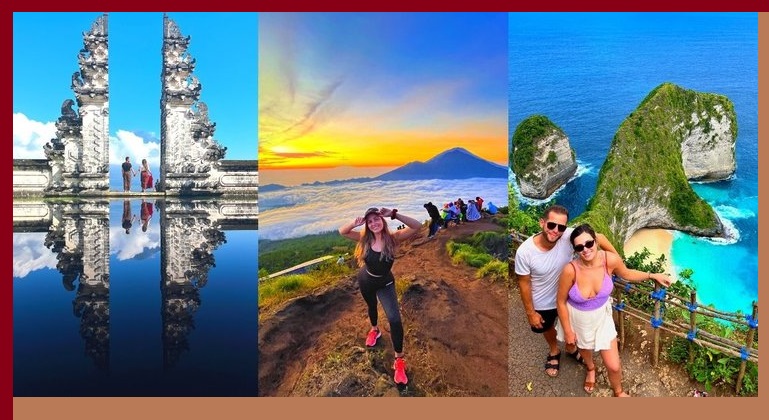
Bali, often called the Island of the Gods, has some of the most photogenic spots in the world. The original version of this post was only 557 words and had three problems: it presented a photo trick as a real reflection, it advised posing on the edge of a cliff where people have died, and it said sunset is the best light at a terrace that faces east. Here is the corrected guide. Also worth reading: Top Model Outfits That Changed Fashion.
1. Tegalalang Rice Terraces — A Green Paradise (Ubud)
The emerald-green terraced fields cascade down the hillsides near Ubud — a masterpiece of traditional Balinese farming and one of the island’s most photographed places.
Why it’s photogenic: the symmetrical layers of the rice paddies and the lush green contrast make for a stunning shot from the higher viewpoints.
Best light: morning. The terraces face east, so sunrise and early morning give the softest light — and the fewest crowds. Sunset is less ideal here.
Practical tips: entrance is around IDR 10,000–25,000 (fees change; check on arrival), with extra charges for the famous swings and photo nests. Ask before photographing local farmers, and tip if you do — they are working, not props. Many Bali tour packages include a stop here.
2. Lempuyang Temple — The Gates of Heaven
Perched on Mount Lempuyang in East Bali, this sacred temple’s grand split gate frames Mount Agung in the background — one of Bali’s most iconic images.
Why it’s photogenic: the symmetrical gates with their intricate carvings create a perfect frame for the mountain.
The mirror trick: the famous “reflective water surface” beneath the gates is not real. A local photographer holds a small mirror under your phone lens. Knowing this saves you from disappointment — and from wondering why there is no lake.
Practical tips: arrive early (gates open around 7 am) — queues of 2–4 hours are common, and Mount Agung is often hidden by cloud, so the gate photo frequently shows no mountain at all. A sarong is required; you can rent one at the entrance. Drones are banned at the temple.
3. Nusa Penida — Kelingking Beach
Nusa Penida, a island just off Bali’s southeast coast, is home to Kelingking Beach — a cliff shaped like a T-rex, with turquoise water below.
Why it’s photogenic: the dramatic cliffs, the T-rex shape, and the crystal-clear water make for an unforgettable shot. A wide-angle lens captures the full expanse.
Safety — read this: stay behind the barriers and never pose on the edge. People have died falling from the cliffs at Kelingking. The hike down to the beach is steep and risky — 30–45 minutes each way, with broken bamboo railings. Wear proper shoes, bring water, and skip the descent if you are not fit or the ground is wet.
Getting there: 30–45 minutes by fast boat from Sanur. Day trips are rushed; consider staying overnight on Nusa Penida to see the island properly.
Worth Adding to Your Itinerary
- Uluwatu Temple — a clifftop temple at sunset, with the Kecak fire dance.
- Tanah Lot — a temple on a rock in the sea, best at sunset.
- Jatiluwih Rice Terraces — UNESCO-listed, quieter and grander than Tegalalang.
- Sekumpul Waterfall — a jungle hike to one of Bali’s most dramatic falls.
Practical Tips for Photographing Bali
- Best light: early morning and late afternoon; midday light is harsh.
- Drones: Indonesia requires registration for drones over 250 g, and many temples ban them.
- Temple dress code: sarongs are required at most temples; rent or buy one at the entrance.
- Crowds: the famous spots are busiest from 9 am to 4 pm — go early or late.
The Bottom Line
Tegalalang at sunrise, Lempuyang at dawn (with realistic expectations about the queue and the clouds), and Kelingking from behind the barrier — those are the three shots worth planning a trip around. Bali’s beauty is real; the mirror at Lempuyang is not.
Also read: Top Instagrammable Spots in Bali for Stunning Photos in 2025!
Visit our Travel category for more travel guides.
Frequently Asked Questions (FAQs)
What are the top 3 photogenic places in Bali?
Tegalalang Rice Terraces (Ubud), Lempuyang Temple’s Gates of Heaven, and Kelingking Beach on Nusa Penida.
Is the mirror reflection at Lempuyang Temple real?
No — a local photographer holds a small mirror under the phone lens to create the reflection effect.
How long is the queue at Lempuyang Temple?
Often 2–4 hours. Arrive early (gates open around 7 am) and expect Mount Agung to be hidden by cloud much of the day.
Is it safe to hike down to Kelingking Beach?
The hike is steep and risky — 30–45 minutes each way with broken bamboo railings. Wear proper shoes, bring water, and stay behind the barriers at the viewpoint.
How do I get to Nusa Penida?
By fast boat from Sanur, 30–45 minutes. Day trips are rushed; staying overnight is better.
Can I fly a drone in Bali?
Indonesia requires registration for drones over 250 g, and many temples ban drones entirely.
