

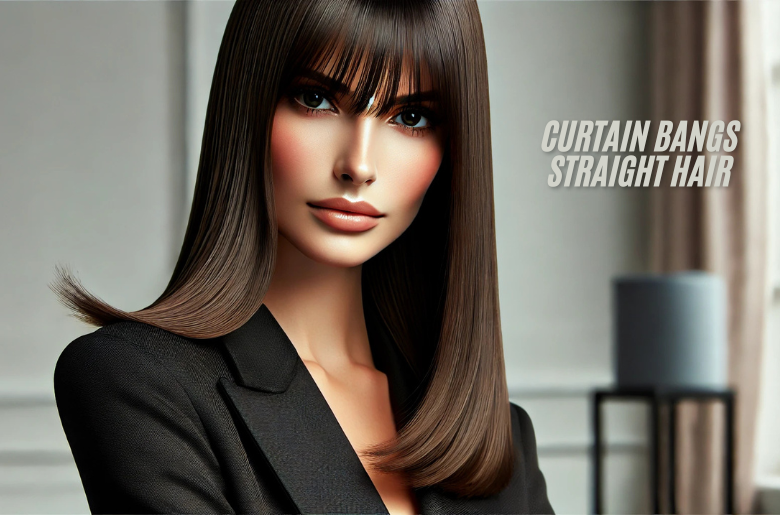
Curtain bangs with straight hair are a chic, versatile choice for refreshing your look — the soft, face-framing effect of curtain bangs with the sleekness of straight hair. The original version of this post was a decent guide, but it contradicted itself on trims (4–6 weeks in one place, 6–8 in another) and claimed curtain bangs “eliminate the need for frequent trims” while also telling you to trim them. Here is the corrected guide. Elsewhere on the site: Kinky Hair Market Entrepreneurs.
What Are Curtain Bangs?
Curtain bangs are a fringe parted down the middle, shortest in the centre (around the eyebrows) and lengthening out to the cheekbones at the sides, sweeping away from the face like curtains — hence the name. Unlike blunt bangs, which are heavy and straight across, curtain bangs are lighter and airier. They work with many hair textures, but they particularly shine on straight hair, where the shape shows clearly and the bangs cascade elegantly.
A Short History
Curtain bangs date back to the 1960s and 70s, when Brigitte Bardot and Jane Birkin popularised the style. Their effortless charm made them timeless, and they came back in the late 2010s and 2020s through celebrities including Alexa Chung, Dakota Johnson, and Camila Cabello. The related “Birkin bangs” — Jane Birkin’s straight-across fringe — is a 2025–26 trend.
Why Curtain Bangs Work with Straight Hair
- Versatile styling: they complement sleek and straight looks, waves, updos, and braids, and can be dressed up or kept casual.
- Face-framing: they draw attention to the eyes and cheekbones and can balance angular features.
- Lower maintenance than blunt bangs: they grow out gracefully and blend with longer hair — but they still need trims every 4–6 weeks to hold their shape.
- Straight hair shows the shape: the clean lines of straight hair make the curtain shape crisp and visible.
One caveat: straight hair can fall flat, so curtain bangs on straight hair need a little styling to hold their shape — a round brush while blow-drying, or a flat iron for a sleek finish. Fine straight hair benefits from volumising mousse at the roots; thick straight hair may need thinning or texturising so the bangs do not look heavy. And bangs sit on the forehead, so they get oily faster than the rest of your hair — dry shampoo is the fix.
How to Get Curtain Bangs
Length: the shortest point should be around the eyebrows, sweeping out to the cheekbones at the sides, then blending into the rest of your hair. Consult a stylist to find the right length for your face shape.
Cutting technique: stylists use point-cutting to create soft, textured edges that integrate naturally with your hair, avoiding the harsh lines of blunt bangs.
Styling: start with clean, dry hair. Use a round brush while blow-drying to lift the bangs at the roots for a soft, airy effect. Use a flat iron for a sleek finish — always with a heat protectant. Finish with a lightweight serum or styling cream for shine and frizz control; avoid heavy products that weigh the bangs down.
Best Face Shapes
- Oval: almost any curtain bangs style suits this balanced shape.
- Round: longer curtain bangs elongate the face.
- Square: soft, wispy bangs soften angular features.
- Heart: curtain bangs balance a wider forehead with a narrower chin.
- Long/oblong: bangs shorten the appearance of a long face.
Styling Ideas
- Sleek and polished: flat iron the bangs straight, pair with a low ponytail or a sleek bob.
- Casual and effortless: let the bangs air dry, add texturising spray for a soft, tousled look.
- Elegant updos: leave the bangs down to frame the face with a bun or chignon.
- Braided styles: pull a few strands loose for a softer appearance.
- Colour: soft balayage or face-framing highlights add dimension and movement; lighter tones around the face brighten the complexion, while lowlights add depth.
Maintenance
- Trims every 4–6 weeks to maintain the shape.
- Washing: use a gentle shampoo and conditioner. You do not need to wash daily — that strips natural oils — but bangs get oily fast, so use dry shampoo between washes.
- Heat protection: always use a heat protectant with hot tools.
- Products: match them to your hair type — volumising products for fine hair, smoothing serums or lightweight oils for thicker hair.
Common Mistakes to Avoid
- Overusing heat tools — frequent flat-ironing damages bangs; limit heat styling to a few times a week.
- Ignoring your hair type — fine and thick straight hair need different approaches.
- Cutting them too short — the shortest point should be around the eyebrows, not above them.
- Skipping trims — after about six weeks the shape is gone and the look turns unkempt.
The Bottom Line
Curtain bangs with straight hair are timeless, versatile, and flattering on most face shapes — with the right cut (shortest at the eyebrows, sweeping to the cheekbones), a round brush or flat iron, heat protectant, and a trim every 4–6 weeks. They are lower maintenance than blunt bangs, but not no-maintenance: the shape is the whole point, and it needs upkeep.
Visit our Fashion category for more style guides.
Frequently Asked Questions (FAQs)
Are curtain bangs suitable for straight hair?
Yes — they work beautifully with straight hair, creating a sleek, face-framing look. Straight hair shows the shape clearly, though it needs a little styling (round brush or flat iron) to hold it.
How do I style curtain bangs with straight hair?
Blow dry with a round brush for volume, or use a flat iron for a sleek finish. Always use a heat protectant, and finish with a lightweight serum.
What length is ideal for curtain bangs?
Shortest around the eyebrows in the centre, lengthening to the cheekbones at the sides, then blending into the rest of your hair.
How often should I trim curtain bangs?
Every 4–6 weeks to maintain the shape.
Why do my curtain bangs get oily so fast?
They sit on your forehead, so they pick up skin oils faster than the rest of your hair. Use dry shampoo between washes.
What face shapes suit curtain bangs?
Most — oval, round (longer bangs), square (soft, wispy), heart, and long faces all work with the right length and texture.
