

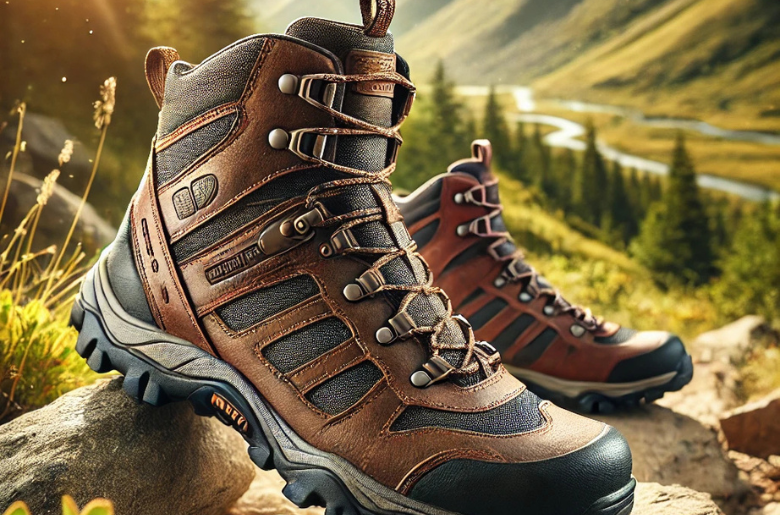
Merrell boots have earned a reputation as one of the leading footwear brands in the outdoor industry, known for exceptional comfort, durability, and performance. The original version of this post was a generic brand overview — accurate, but with no specific models, no prices, and no honest limitations. Here is the corrected guide.
A Short History
Merrell was founded in 1981 by Randy Merrell, a custom bootmaker in Utah whose handmade hiking boots cost around $500 a pair — a fortune at the time. The brand was acquired by Wolverine World Wide in 1997 and has since become one of the biggest names in outdoor footwear, built on the Moab line.
The Best Merrell Boots
| Model | Price (approx., 2026) | Best for |
|---|---|---|
| Moab 3 (low) | ~$130–$150 | Day hiking; the best-selling hiking boot in the US |
| Moab 3 Mid Waterproof | ~$165 | Day hiking in wet conditions |
| Moab Speed 2 | ~$140–$150 | Faster, lighter day hiking |
| Antora 4 | ~$140 | Trail running |
| Agility Peak 5 | ~$160 | Cushioned trail running |
| Thermo Chill Mid Waterproof | ~$180 | Insulated winter boot |
Comfort
- Cushioned insoles and midsoles — Merrell’s Air Cushion in the heel absorbs shock and reduces fatigue on long hikes.
- Breathable materials — mesh linings and uppers promote airflow, keeping feet cool and dry in warm conditions.
- Ergonomic design — the anatomical shape accommodates the contours of your feet, reducing blisters and hot spots.
- Lightweight construction — the Moab 3 weighs around 2 lb per pair, light for a hiking boot.
- Sizing — Merrell generally runs true to size, wide widths are available on most models, and the Moab needs minimal break-in.
Durability
Merrell boots are built from full-grain leather, synthetic materials, and rubber outsoles, with reinforced stitching and toe caps to protect against rocks and trail obstacles. Many models are waterproof: premium models use Gore-Tex, while cheaper models use Merrell’s own M Select DRY membrane. Both keep water out while allowing some breathability. The outsoles — many made by Vibram (the Moab uses Vibram TC5+) — are engineered for grip on rock, mud, and wet surfaces.
Styles
- Hiking boots — from lightweight day hikers (Moab 3) to more robust mid-height models for challenging trails.
- Casual boots — styles that blend outdoor comfort with everyday wear, suitable for urban and rural settings.
- Trail running shoes — lightweight, breathable, with strong traction for uneven surfaces (Antora, Agility Peak).
- Winter boots — insulated and waterproof for snow and cold (Thermo Chill).
- Work boots — Merrell also makes a work line for demanding environments.
Performance
Merrell boots combine traction (Vibram tread patterns), support (cushioned midsoles and supportive arches), and flexibility (the Bellows Flex in the Moab lets the forefoot bend naturally). The shock absorption reduces strain on feet and joints, which matters most on steep or uneven paths over long distances.
Sustainability
Merrell increasingly uses recycled materials in midsoles, linings, and outsoles. It is a real effort, though a boot is still a manufactured product — the most sustainable choice is a durable boot you wear for years, which is what the Moab is designed to be.
Honest Limitations
- Not mountaineering boots. Merrell makes no crampon-compatible models — for alpine climbing, look elsewhere.
- The Moab is a day-hiking boot. For multi-day backpacking with a heavy pack, a stiffer boot gives better support.
- Trail runners are not the lightest. Merrell’s trail shoes are comfortable and durable, but lighter options exist from other brands.
Best Uses
- Hiking and backpacking — day hikes and short trips (Moab 3); longer trips with lighter packs.
- Casual outings — the Moab and casual models transition easily to everyday wear with jeans or shorts.
- Trail running — Antora and Agility Peak for off-road running.
- Winter activities — insulated, waterproof models for snowshoeing and winter hiking.
The Bottom Line
The Moab 3 (~$130–$150) is the default recommendation for a reason: it is comfortable out of the box, durable, waterproof in the Mid version, and the best-selling hiking boot in the US. Buy the Moab Speed 2 if you want something lighter, the Antora 4 or Agility Peak 5 for trail running, and the Thermo Chill for winter. Just do not expect a mountaineering boot.
Apart from that if you want to know about “Street Style 2024: Top Fashion Trends for Spring, Summer and Fall, Winter from Paris and Around the World” then please visit our “Fashion” Category.
Frequently Asked Questions (FAQs)
Are Merrell boots comfortable for all-day wear?
Yes — anatomical footbeds, cushioned midsoles, and Air Cushion in the heel give all-day comfort with reduced foot fatigue.
Are Merrell boots waterproof?
Many are. Premium models use Gore-Tex; cheaper models use Merrell’s own M Select DRY membrane. Both keep feet dry while maintaining some breathability.
Do Merrell boots provide good traction?
Yes — many models use Vibram outsoles (the Moab uses Vibram TC5+), with tread patterns designed for rock, mud, and wet surfaces.
Do Merrell boots run true to size?
Generally yes, and wide widths are available on most models. The Moab needs minimal break-in.
What is the best Merrell boot for hiking?
The Moab 3 — the best-selling hiking boot in the US. The Mid Waterproof version (~$165) is the pick for wet conditions.
Are Merrell boots good for mountaineering?
No — Merrell makes no crampon-compatible mountaineering boots.
