

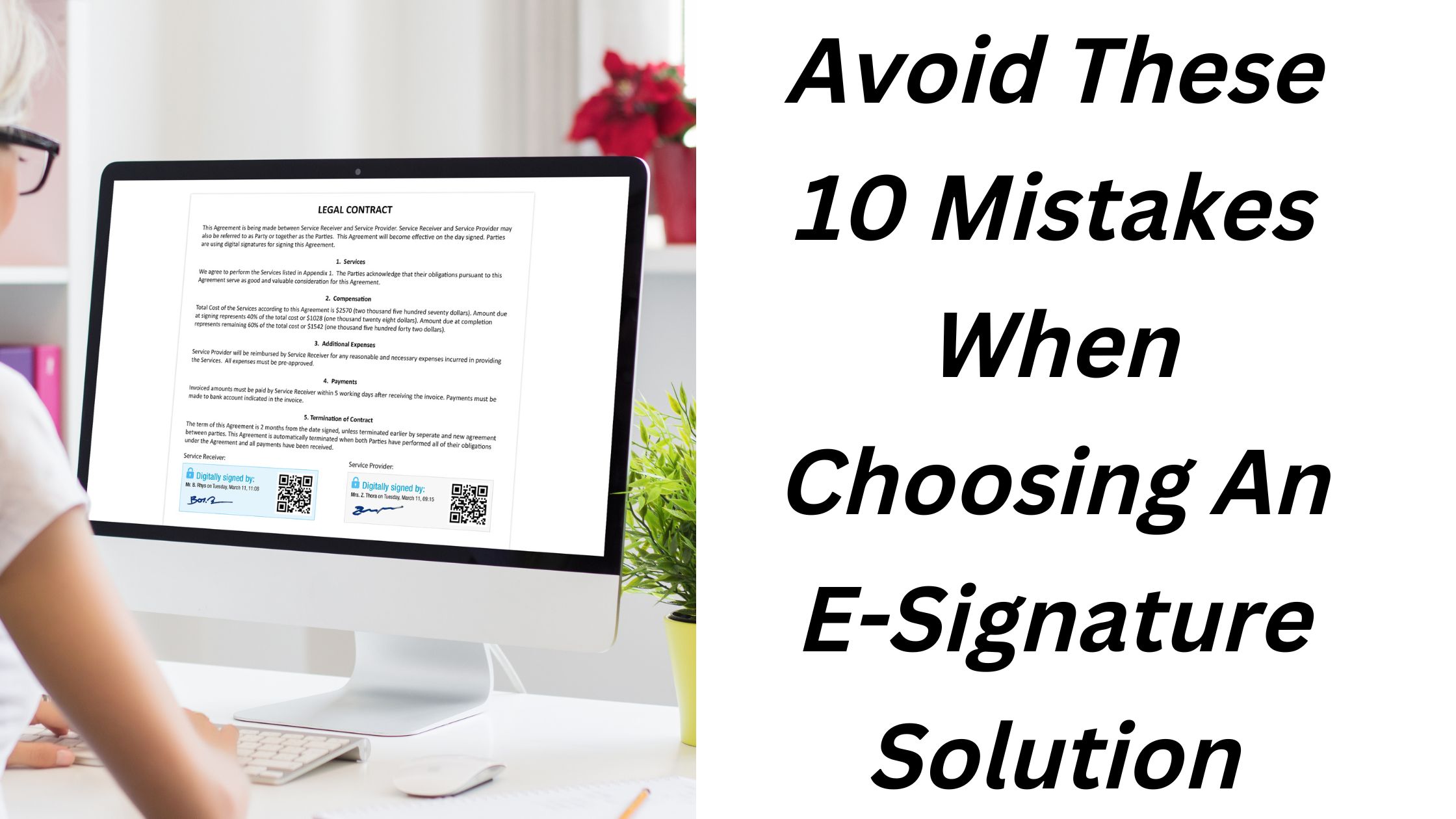
The adoption of virtual endorsements is rapidly expanding worldwide as more individuals and businesses seek efficient and secure digital signing solutions. With numerous options available, evaluating and selecting the right electronic signature platform can be challenging. To help you make an informed decision, here are some common mistakes to avoid when choosing your online signature solution, ensuring you pick the perfect fit for your needs.
Also Read – Digital Signature Certificate.
Choosing an Online Endorsement Solution That Isn’t Secure and Trustworthy
The main reason for adopting digital signing is enhanced security and overcoming the limitations of traditional paper-based signatures. The most secure solutions guarantee document safety, 100% authenticity of signers, and prevent tampering after signing. Look for platforms that record the signing process and maintain an immutable audit trail, ideally stored on blockchain technology, ensuring non-repudiation and complete transparency.
Selecting a Virtual Endorsement Platform That Isn’t User-Friendly
A truly user-friendly solution should allow signing a document within just 2-3 clicks. The simpler and faster the process, the better. Choose software that minimizes steps for sending, signing, and receiving documents. Intuitive design, easy navigation, and seamless usability enhance user experience and adoption among your team and clients.
Using Virtual Endorsements That Don’t Integrate With Your Existing Applications
Your digital signature solution should effortlessly integrate with tools like Google Drive, OneDrive, Dropbox, or any other software your organization uses. Full automation only becomes possible when the e-signature platform aligns perfectly with your existing workflows and management systems, improving efficiency and reducing manual work.
Taking Advantage of Free Trials
Just like test-driving a car helps you understand its features, free trials of e-signature solutions allow you to evaluate if the product meets your organizational needs. Opt for providers like Signature, which offer unlimited-day free trials, enabling you to thoroughly test functionalities without restrictions before committing.
Avoiding Solutions That Don’t Meet Industry Compliance Standards
Compliance is critical when choosing an e-signature platform. Ensure it adheres to all relevant regulations such as the ESIGN Act (US), eIDAS (EU), and any country-specific digital signature laws. This guarantees that your electronically signed documents are legally binding and recognized internationally, reducing the risk of disputes.
Selecting a One-Stop Solution for All Your Signing Needs
Choose a comprehensive platform that covers all your signing requirements in one place, avoiding the hassle of managing multiple solutions. Look for features including electronic signatures, digital signatures, biometric authentication, and blockchain security. Signature offers all these features, ensuring your documents receive the highest level of protection and versatility.
Assessing Long-Term Benefits
When adopting electronic signatures, define your goals clearly. Are you aiming for long-term security, cost savings, or a paperless office environment? Cheap or simplistic solutions might be tempting but could lack the security and scalability your organization requires. A robust investment today will pay dividends over time.
Avoiding Solutions That Lack Rich Features
An effective e-signature provider should deliver on its promises with strong security and flexibility. Additionally, having a rich feature set allows users to complete signing processes swiftly and effortlessly, with an intuitive UI that balances usability and powerful functionality without overwhelming users.
Avoiding Platforms That Don’t Provide Regular Updates
Technology evolves rapidly, and your e-signature solution should keep pace with industry standards and technological advancements. Opt for providers that offer regular updates, security patches, and new features to ensure your platform remains secure and efficient.
Choosing a Non-Versatile Digital Signature Solution
With the rise of remote work and mobile usage, select a digital signing platform that supports signing on any device—desktop, tablet, or smartphone. The ability to sign documents anytime, anywhere increases productivity and convenience.
Recommended Read – Difference Between Class 2 And Class 3 Digital Signature Certificate.
Conclusion
Before selecting a virtual signature solution, clearly identify your objectives. Thoroughly evaluate providers based on security, compliance, ease of use, integration capabilities, and features. Avoid the common mistakes outlined above to ensure you choose a reliable and scalable platform that meets your organization’s needs.
If you want to learn more about Choosing An E-Signature Solution, please visit our Business page for detailed information and resources.
Frequently Asked Questions (FAQs)
Look for end-to-end encryption, multi-factor authentication, tamper-proof audit trails, blockchain integration, and compliance with industry standards like ESIGN and eIDAS.
An electronic signature is legally valid if it meets regulatory standards such as the ESIGN Act (United States) or eIDAS (European Union), ensures signer authentication, document integrity, and non-repudiation.
Yes, most modern e-signature solutions offer seamless integration with popular cloud storage and productivity tools, enabling easier document management and signing workflows.
Absolutely, as mobile accessibility allows users to review and sign documents on the go, improving convenience and turnaround times.
Regular updates ensure the platform stays secure, fixes bugs, complies with evolving regulations, and introduces new features, keeping your digital signing process efficient and safe.
