

Introduction
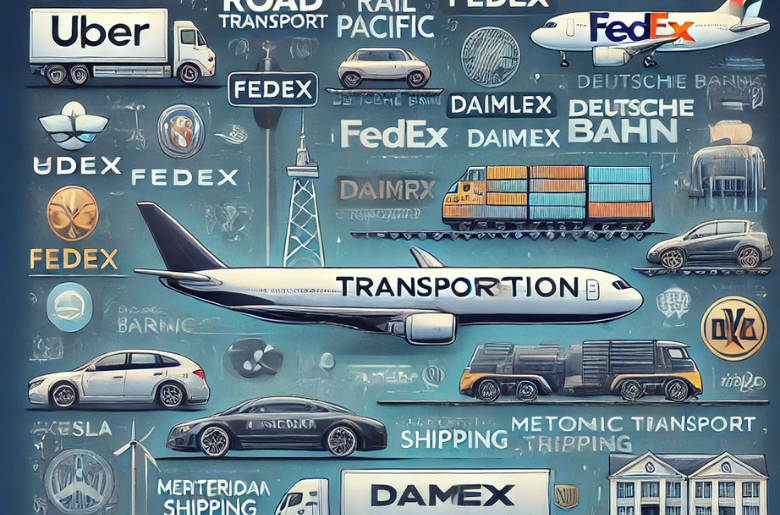
The transportation industry remains one of the most dynamic and vital sectors of the global economy. It plays a crucial role in shaping supply chains, facilitating international trade, and enabling personal mobility worldwide. This vast industry encompasses a diverse array of companies providing services through multiple modes of transportation—road, rail, air, and maritime.
Driven by increasing demand for faster, more efficient, and sustainable transport solutions, the industry is undergoing significant technological advancements, regulatory reforms, and shifts in consumer preferences.
This article explores the prominent companies operating in the transportation field and their influence on global connectivity and mobility.
| Sector | Key Companies | Description |
| Road Transport | Uber, FedEx, Daimler AG | Ride-sharing, package delivery, and vehicle manufacturing. |
| Rail Transport | Union Pacific, Deutsche Bahn, Canadian National Railway | Freight and passenger services across the U.S., Europe, and North America. |
| Air Transport | Delta Air Lines, FedEx Express, Emirates Airlines | Passenger travel and air freight services offering global connectivity. |
| Maritime Transport | Maersk Line, Mediterranean Shipping Company (MSC), CMA CGM | Container shipping and worldwide cargo transportation. |
| Emerging Technologies | Tesla, Waymo, Virgin Hyperloop | Innovations in electric vehicles, autonomous driving, and high-speed travel. |
This table provides an overview of major companies in key transportation sectors and highlights their contributions to enhancing global mobility.
The Transportation Industry: An Overview
To better understand the landscape of the transportation industry, it’s essential to recognize its main segments, which include:
- Road Transport: Encompasses companies operating vehicles such as trucks, buses, ride-sharing platforms, and logistics providers.
- Rail Transport: Operators of freight and passenger rail networks facilitating long-distance movement of goods and people.
- Air Transport: Airlines and air freight companies that provide both passenger services and cargo transport internationally.
- Maritime Transport: Shipping companies managing cargo vessels, tankers, and passenger ferries, covering transport across oceans and waterways.
- Logistics and Supply Chain Management: Firms that coordinate warehousing, inventory management, and the seamless movement of goods through freight forwarding.
Transportation companies are the backbone of sectors like retail, manufacturing, and tourism, seamlessly connecting individuals and enterprises worldwide. Let’s now explore some of the top players within each segment.
What Companies Are in the Transportation Field?
1. Uber Technologies Inc.
Uber Technologies Inc. is a globally recognized leader in the ride-sharing domain. Its platform has revolutionized personal transportation by offering convenient, on-demand rides in hundreds of cities worldwide. Beyond traditional ride services, Uber’s innovations include options like UberPOOL for ride-sharing and UberEATS for food delivery.
Uber is actively investing in autonomous driving technologies and electric vehicle integration, underscoring its commitment to environmentally friendly and future-forward mobility solutions.
2. FedEx Corporation
FedEx is a global giant in logistics, specializing in package delivery and freight services. With a large fleet comprising trucks, delivery vans, and aircraft, FedEx ensures reliable and timely shipment of goods across the globe.
The company’s services range from ground shipping and express parcels to freight forwarding. FedEx also prioritizes sustainability, implementing electric vehicles in delivery fleets and adopting eco-conscious packaging standards.
3. Daimler AG
Daimler AG, the parent company of Mercedes-Benz, is a prominent manufacturer specializing in luxury cars, trucks, and commercial vehicles. Its products serve both individual consumers and commercial transport needs globally.
Daimler actively explores autonomous vehicle technologies and advances electric vehicle production, aiming to foster greener and smarter roads worldwide.
Rail Transport: Connecting Regions and Industries
Union Pacific Corporation
- One of the largest freight railroad networks across the United States, covering over 23 states.
- Transports a wide range of goods including agricultural products, chemicals, automotive parts, and industrial supplies.
- Leads innovation with automation and advanced railcar technologies to enhance efficiency, safety, and sustainability.
Deutsche Bahn AG
- Germany’s national railway operator and a leading player in Europe’s rail transport sector.
- Offers extensive passenger and freight services connecting cities and countries via high-speed and regional trains.
- Committed to sustainability by reducing emissions and improving energy efficiency.
- Invests heavily in digital solutions such as online bookings and real-time tracking of passengers and freight.
Canadian National Railway (CNR)
- One of Canada’s largest freight rail operators with operations spanning North America.
- Facilitates trade between Canadian and U.S. markets, carrying energy products, agricultural goods, and consumer merchandise.
- Utilizes data-driven strategies to optimize routing, improve fuel efficiency, and bolster safety.
Air Transport: Airlines and Air Freight Giants
1. Delta Air Lines
Delta Air Lines ranks among the world’s largest carriers, operating a vast fleet with extensive domestic and international routes. It serves millions of passengers annually and plays a significant role in both passenger travel and air cargo sectors.
Delta is a sustainability leader, pioneering the adoption of sustainable aviation fuels (SAF) and other green initiatives to lower its environmental impact.
2. FedEx Express
FedEx Express, a division of FedEx Corporation, dominates the air freight industry. It operates one of the world’s largest cargo aircraft fleets, specializing in urgent delivery of parcels and freight worldwide.
Its air services are critical to sectors like e-commerce, pharmaceuticals, and technology, ensuring rapid and secure shipment of goods across global markets.
3. Emirates Airlines
Headquartered in Dubai, Emirates Airlines stands out as a premier global airline, operating a modern fleet focused on long-haul travel. Emirates is renowned for luxury, exceptional in-flight services, and advanced technology integration.
In addition to passenger services, Emirates maintains a robust air cargo division, specializing in transporting high-value and perishable shipments.
Maritime Transport: Global Shipping Leaders
a. Maersk Line
Maersk Line is the world’s largest container shipping company, managing a fleet of over 700 vessels. It connects ports globally, facilitating the transportation of consumer goods, raw materials, and industrial products.
Maersk is committed to sustainability, endorsing fuel-efficient vessels and implementing carbon emission reduction initiatives across its operations.
b. Mediterranean Shipping Company (MSC)
MSC is another leading global container shipping provider with a vast fleet serving international trade routes. It prioritizes operational efficiency and sustainable shipping practices. Our related guide, Key Considerations and Best Practices, goes further into this.
MSC also operates MSC Cruises, extending its influence into luxury passenger maritime travel.
c. CMA CGM Group
French multinational CMA CGM ranks among the top container shipping companies worldwide. In addition to container shipping, they provide comprehensive logistics services via port terminals and inland transportation.
The company actively pursues innovation and sustainability efforts to optimize fleet management and lower greenhouse gas emissions.
Emerging Technologies and Future Trends in Transportation
The transportation industry is rapidly evolving with breakthrough technologies shaping the future of mobility. Companies across all sectors are investing in innovations like autonomous vehicles, electric propulsion, and smart infrastructure to create efficient, sustainable, and accessible transportation systems.
- Electric Vehicles (EVs): Leaders such as Tesla and Rivian spearhead the EV market, while legacy automakers like Daimler and Ford are massively expanding EV production to drive emission reductions.
- Autonomous Transport: Innovators like Waymo (Alphabet’s subsidiary) and Uber are advancing self-driving technologies to transform personal and freight transportation.
- Hyperloop and High-Speed Rail: Companies including Virgin Hyperloop and Elon Musk’s Boring Company aim to revolutionize inter-city and international travel with ultra-fast transit systems.
Sustainability as a Driving Force in Modern Transportation
In recent years, sustainability has become a central focus for transportation companies across all modes. Beyond reducing emissions, firms are adopting circular economy practices, such as recycling vehicle components, optimizing fuel usage, and implementing green logistics networks.
Rail operators are investing in electrified tracks and regenerative braking systems, while shipping companies experiment with biofuels and wind-assisted propulsion. Airlines are exploring carbon-offset programs and lightweight materials to cut fuel consumption, and ride-sharing platforms increasingly incentivize electric vehicle usage.
Conclusion
The transportation industry is integral to connecting people, markets, and economies globally. From established giants like FedEx, Daimler, and Delta Air Lines to cutting-edge innovators in electric and autonomous transport, the sector continues to drive progress in mobility.
As technology evolves, the transportation field will remain a cornerstone of global commerce and daily life, presenting new opportunities and challenges for companies and consumers alike.
For more information about Custom Packaging please visit our “Business” category.
FAQs
The transportation field comprises several key sectors: road transport, rail transport, air transport, maritime transport, and logistics. Each sector includes companies that contribute to the efficient movement of goods and people globally.
Notable leaders in road transport include Uber, FedEx, and Daimler AG. These companies offer essential services such as ride-sharing, package delivery, and vehicle manufacturing.
Prominent rail transport companies include Union Pacific Corporation in the U.S., Deutsche Bahn AG in Europe, and Canadian National Railway in North America, offering extensive freight and passenger services.
Many transportation companies are adopting eco-friendly technologies such as electric vehicles, sustainable fuels, and energy-efficient vessels and planes. These initiatives aim to reduce carbon footprints and promote greener mobility solutions.
Emerging technologies like autonomous vehicles, electric propulsion, hyperloop systems, and smart logistics platforms are transforming transportation by enhancing efficiency, safety, and sustainability.
Want to know about‘Website Marketing Companies‘Check out our ‘Business‘category.
