

Introduction
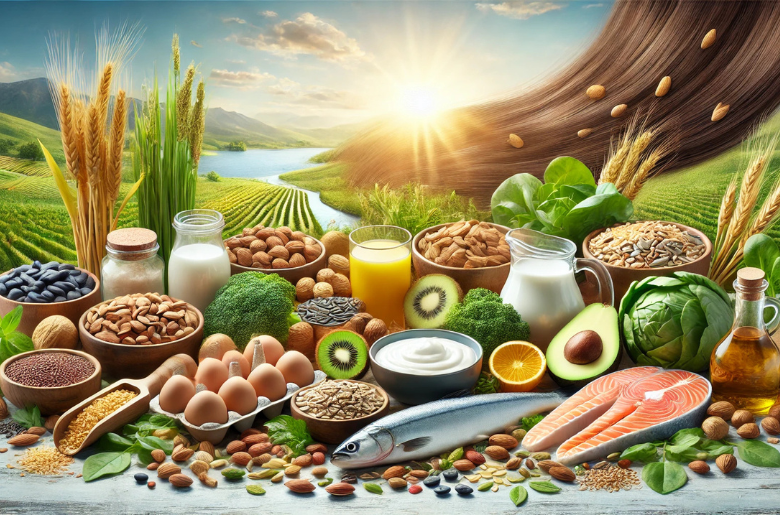
When aiming for beautiful, healthy hair, many overlook the vital role that nutrition plays in hair health. The best vitamins for hair not only enhance strength and shine but also improve overall hair quality. While topical treatments and hair care products are important, true hair vitality begins from within foundation of healthy.
This comprehensive guide explores the essential vitamins and nutrients for optimal hair health, highlights their natural food sources, and offers practical tips to easily incorporate them into your daily diet promote hair health.
| Vitamin | Role in Hair Health | Natural Sources |
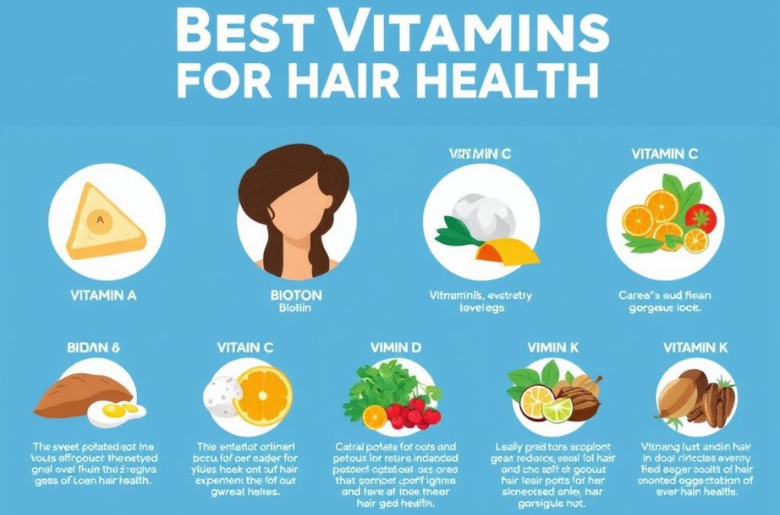
| Vitamin A | Supports cell growth and sebum production for scalp moisture | Sweet potatoes, carrots, spinach, egg yolks |
| Biotin (Vitamin B7) | Boosts keratin production, prevents hair loss | Eggs, nuts, seeds, whole grains |
| Vitamin B6 | Assists red blood cell production to deliver nutrients | Fish, potatoes, bananas, chickpeas |
| Vitamin B12 | Crucial for red blood cell formation and hair growth | Meat, dairy, eggs, fortified cereals |
| Vitamin C | Powerful antioxidant; improves iron absorption | Citrus fruits, strawberries, bell peppers |
| Vitamin D | Stimulates new hair follicle growth | Fatty fish, fortified foods, sunlight |
| Vitamin E | Antioxidant that enhances scalp blood circulation | Nuts, seeds, spinach, avocados |
| Vitamin K | Supports scalp health and blood flow | Leafy greens, broccoli, Brussels sprouts |
The Importance of Nutrition for Hair Health
Hair is primarily made of keratin, a protein that requires adequate nutrients to grow strong and healthy. A balanced diet rich in vitamins, minerals, and other essential nutrients is fundamental for maintaining the vitality and resilience of your hair health and overall. Nutritional deficiencies can cause hair thinning, increased shedding, and lackluster texture, emphasizing the need for proper vitamin intake.
Best Vitamins for Hair Health
1. Vitamin A
Role in Hair Health: Vital for cellular growth, vitamin A aids the production of sebum—a natural oil that keeps the scalp hydrated and hair nourished.
Sources: Include sweet potatoes, carrots, spinach, kale, and apricots in your diet. Animal sources such as egg yolks and liver are also rich in vitamin A.
2. B Vitamins
B vitamins, especially Biotin (Vitamin B7), B6, and B12, play a pivotal role in maintaining healthy hair.
- Biotin: Supports keratin production essential for strong hair; deficiency is linked to hair loss and brittleness.
- Vitamin B6: Facilitates red blood cell production, ensuring oxygen delivery to hair follicles.
- Vitamin B12: Assists in red blood cell formation to nourish hair roots.
Sources: Rich in whole grains, eggs, nuts, seeds, leafy greens, and dairy products.
3. Vitamin C
Role in Hair Health: Acts as a potent antioxidant protecting hair follicles from oxidative damage and enhances iron absorption pivotal for hair growth.
Sources: Citrus fruits, strawberries, bell peppers, kiwi, and broccoli.
4. Vitamin D
Role in Hair Health: Crucial for the formation of new hair follicles; low vitamin D levels have been connected to hair loss disorders like alopecia areata.
Sources: Natural sunlight exposure, fatty fish such as salmon and mackerel, fortified dairy, and egg yolks.
5. Vitamin E
Role in Hair Health: An antioxidant that enhances scalp blood circulation, promoting healthier and faster hair growth while protecting against oxidative stress.
Sources: Nuts, seeds, spinach, and avocados.
6. Vitamin K
Role in Hair Health: Supports scalp skin health and blood circulation, which are essential for preventing hair loss and fostering hair growth.
Sources: Leafy green vegetables, broccoli, Brussels sprouts, and fermented foods.
Minerals Essential for Hair Health
Alongside vitamins, specific minerals are indispensable for healthy hair growth and maintenance.
Iron
Role in Hair Health: Iron delivers oxygen to hair follicles; a deficiency often causes hair thinning and excessive hair loss.
Sources: Red meat, poultry, lentils, beans, and fortified cereals. Consuming vitamin C-rich foods alongside iron-rich meals improves absorption.
Zinc
Role in Hair Health: Supports hair tissue growth and repair, and maintains healthy oil glands around hair follicles.
Sources: Oysters, beef, pumpkin seeds, lentils, and chickpeas.
Selenium
Role in Hair Health: Acts as an antioxidant protecting scalp and follicles from free radicals and aids thyroid hormone production critical for hair growth.
Sources: Brazil nuts, fish, and whole grains.
Magnesium
Role in Hair Health: Facilitates protein synthesis and numerous biochemical reactions necessary for hair strength and health.
Sources: Leafy greens, nuts, seeds, and whole grains.
The Role of Antioxidants in Hair Protection
In addition to vitamins and minerals, antioxidants play a crucial role in protecting hair from environmental damage and premature aging. Free radicals generated by pollution, UV exposure, and stress can weaken hair follicles, leading to dryness, breakage, and hair loss.
Incorporating antioxidant-rich foods like berries, nuts, green tea, and leafy vegetables can complement your hair care routine by defending your hair from oxidative stress while supporting overall scalp health.
Natural Sources of Hair-Healthy Vitamins
Incorporating the best vitamins for hair health into your daily meals can be simple and delicious. Consider these natural sources:
- Fruits and Vegetables: Aim for a rainbow of colors to maximize vitamin intake. Dark leafy greens, berries, citrus fruits, and peppers are highly beneficial.
- Nuts and Seeds: Almonds, walnuts, flaxseeds, and chia seeds provide essential vitamins and healthy fats that support hair structure.
- Protein-Rich Foods: Eggs, fish, poultry, and legumes supply vital proteins and vitamins crucial for hair growth.
- Whole Grains: Brown rice, quinoa, oats, and other whole grains are excellent sources of B vitamins and minerals.
Supplements for Hair Health
While natural food sources should be your primary method of obtaining vitamins, supplements can be useful for those with specific nutritional gaps or dietary limitations. It is important to consult a healthcare professional before beginning any supplementation regimen.
Popular Hair Supplements
- Biotin Supplements: Especially beneficial if your diet is low in biotin, supporting keratin synthesis and hair strength.
- Multivitamins: Provide a comprehensive range of essential vitamins and minerals for overall hair and body health.
- Collagen Supplements: Supports skin elasticity and may contribute to stronger, healthier hair strands.
Lifestyle Factors Affecting Hair Health
Beyond nutrition, several lifestyle habits also influence hair health:
1. Hydration
Proper hydration ensures optimal nutrient transportation to hair follicles and maintains a moisturized scalp, reducing dryness and flakiness.
2. Stress Management
Chronic stress negatively impacts hair growth, sometimes triggering hair loss. Integrating activities like yoga, meditation, and exercise can mitigate stress and benefit hair health.
3. Proper Hair Care
Use gentle, sulfate-free shampoos and conditioners to preserve natural oils. Limit heat styling and harsh chemical treatments that can weaken hair strands.
4. Regular Trims
Consistent haircuts prevent split ends and breakage, encouraging healthier and fuller hair growth.
Conclusion
Beautiful, healthy hair is the result of both external care and internal nourishment. Incorporating a variety of essential vitamins and minerals into your diet promotes stronger, shinier, and more resilient hair. Focus on maintaining a balanced diet abundant in fruits, vegetables, whole grains, and protein-rich foods for optimal hair health.
By understanding and prioritizing the key nutrients that support hair health, you can nurture your hair from the inside out. Whether through natural foods or supplements, consistent care and nutrition are fundamental to achieving the luscious, vibrant hair you desire. With patience and dedication, you’ll enjoy the confidence that comes with truly healthy hair.
If you’re interested in learning about “A Few Pointers” please explore our “Health” category for in-depth information.
FAQs
Biotin, also known as Vitamin H, supports keratin production—the protein essential for strong, healthy hair. A deficiency in biotin can lead to hair loss, thinning, and brittle strands.
The top vitamins for hair growth include Vitamin A, B vitamins (especially Biotin, B6, and B12), Vitamin C, Vitamin D, and Vitamin E, all of which support hair follicle health and growth.
Yes, Vitamin D is vital for stimulating new hair follicle formation and may help prevent hair loss conditions such as alopecia areata.
Hair supplements can be beneficial, especially for individuals with nutritional deficiencies or dietary restrictions. However, results vary, and it’s best to consult with a healthcare provider before starting any supplement regimen.
Hair growth cycles mean improvements from vitamins may take 3 to 6 months to become noticeable. Consistency in nutrition and care is key to seeing lasting results.
