

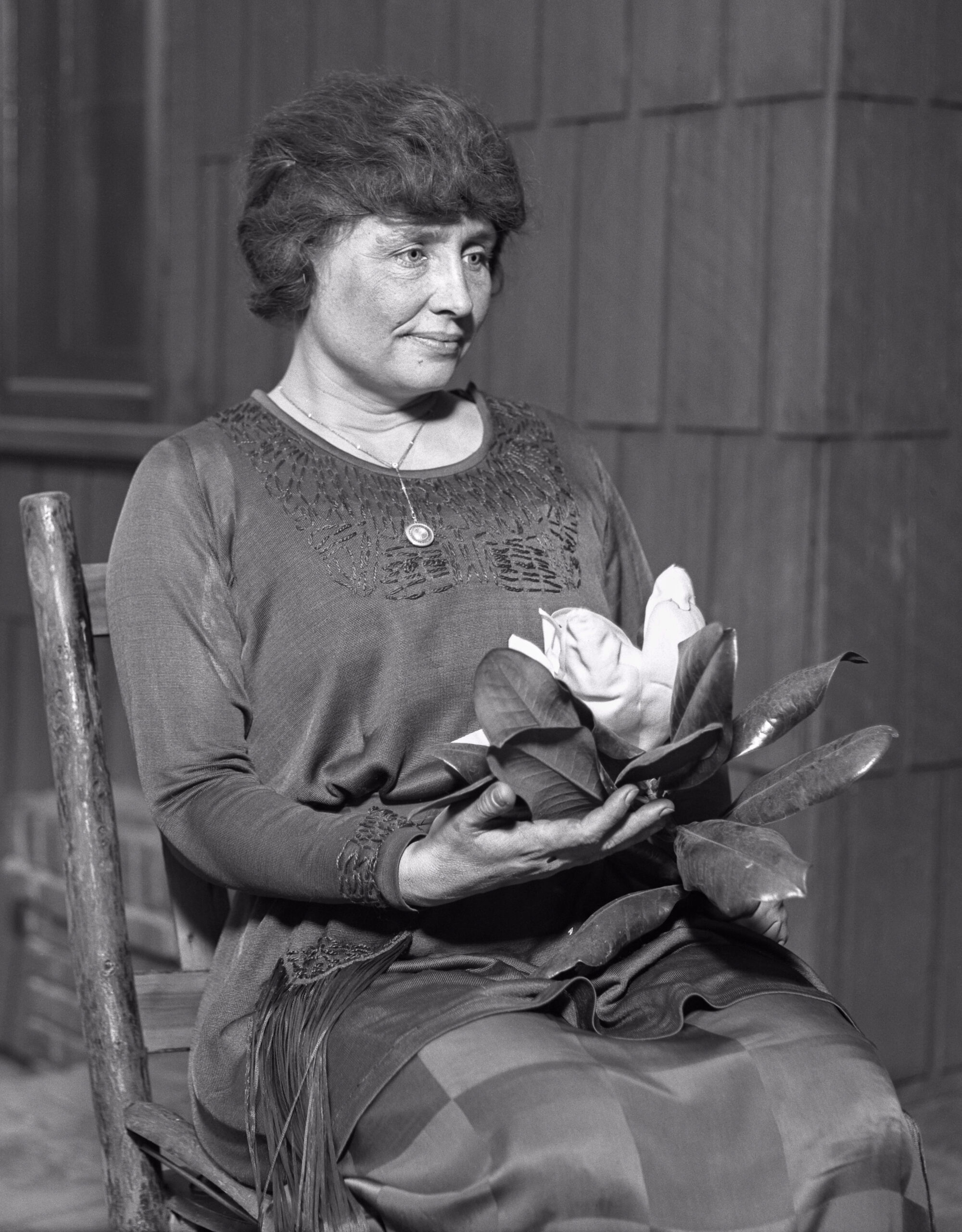
Helen Keller remains one of the most inspiring figures in human history. Born in 1880 in Tuscumbia, Alabama, her life story transcends the limitations imposed by being both deaf and blind, exemplifying perseverance and courage. But this post’s original title — “Helen Keller Net Worth” — came with a problem: the figure it gave, $45 million, is not credible. Here is the truth about her wealth, and the life that actually made her famous.
Helen Keller’s Net Worth: The Figure Is Wrong
Some websites list Helen Keller’s net worth at $45 million. That figure is not credible. Keller died in 1968. She lived modestly on a salary from the American Foundation for the Blind, lecture fees, and book royalties, with support from patrons — and she left a small estate. $45 million in 1968 would be roughly $400 million today. No reliable source supports it. The original version of this post itself contradicted the figure in its own “Financial Struggles” and “Speculations and Rumors” sections, which said her wealth was “modest” and that claims she inherited a fortune were false. Both of those are true; the $45 million is not.
Net-worth figures for historical figures are speculative by nature — they are usually invented by content sites, not drawn from records. In Keller’s case, the honest answer is: she was not wealthy. Her real story is not about money at all.
Early Life and Education
Helen Adams Keller was born on 27 June 1880 in Tuscumbia, Alabama. At just 19 months old, she contracted an illness — described at the time as “brain fever”, most likely meningitis or scarlet fever — that left her both deaf and blind. Her parents sought help, and in March 1887 Anne Sullivan arrived as her teacher. The famous breakthrough came a month later at the water pump, when Sullivan spelled “w-a-t-e-r” into Keller’s hand and she understood that the signs meant things. Sullivan became her teacher and lifelong companion for 49 years, until Sullivan’s death in 1936.
Under Sullivan’s guidance, Keller achieved extraordinary educational milestones, culminating in her graduation cum laude from Radcliffe College in 1904 — the first deaf-blind person ever to earn a Bachelor of Arts degree. Her education was funded by patrons, including Henry Huttleston Rogers of Standard Oil.
Career and Achievements
Keller’s identity was forged not by her disabilities but by her tireless work as an advocate and author. She travelled worldwide, promoting disability rights and education, women’s suffrage, labour rights, and pacifism. She authored 12 books (not “dozens”, as the original claimed) and numerous articles and essays, including The Story of My Life (1903), Optimism (1903), The World I Live In (1908), My Religion (1927), Midstream (1929), and Teacher: Anne Sullivan Macy (1955). She became a renowned public speaker.
Her exceptional contributions earned her prestigious honours, including the Presidential Medal of Freedom (1964, awarded by President Lyndon B. Johnson) and the Chevalier of the French Legion of Honour (1952). She was inducted into the National Women’s Hall of Fame in 1973, after her death.
Financial Reality
Despite her global acclaim, Helen Keller faced significant financial difficulties. Her disabilities limited traditional employment opportunities, and she relied on speaking engagements, book royalties, and support from patrons. From 1924 she worked for the American Foundation for the Blind, which provided a salary and support. Managing her finances in a period lacking modern assistive technologies added complexity, requiring careful planning and assistance. She lived modestly — and, contrary to the rumours the original post itself debunked, she did not inherit a fortune and did not do endorsements.
Controversies and Criticisms
Keller faced criticism primarily for her political views — notably her outspoken advocacy for socialism and pacifism, which stirred controversy during her era. She was a member of the Socialist Party of America and a co-founder of the American Civil Liberties Union (ACLU) in 1920. She remained committed to championing social justice and equality throughout her life despite the opposition. Her politics are often left out of the inspirational version of her story; they were central to who she was.
Legacy and Impact
Keller’s legacy extends well beyond finances. Her advocacy transformed societal attitudes towards people with disabilities and helped advance disability rights and education. Her story continues to inspire millions worldwide, symbolising resilience, dignity, and the triumph of the human spirit over adversity. Her life has been depicted in numerous films, plays, and books — most famously The Miracle Worker (play 1959, film 1962), with Anne Bancroft as Sullivan and Patty Duke as Keller, both of whom won Academy Awards.
The Bottom Line
Helen Keller’s net worth cannot honestly be quantified as $45 million — she was not wealthy, and the figure is an invention. Her true wealth was immeasurable: a life that overcame profound disability, a degree from Radcliffe, 12 books, a lifetime of activism, and a legacy that changed how the world treats people with disabilities. That is the story worth telling.
Read more: Michael J Fox Net Worth: A Wealth of Talent and Success. For more information, explore How Much Is Jennifer Tilly Worth and visit our Entertainment category.
Frequently Asked Questions (FAQs)
What was Helen Keller’s net worth?
There is no reliable figure. Websites commonly list $45 million, but that is not credible — Keller died in 1968 and lived modestly on a salary from the American Foundation for the Blind, lecture fees, and royalties. She was not wealthy.
Did Helen Keller inherit a fortune?
No. Despite rumours suggesting otherwise, her financial resources came from royalties, speaking engagements, and support from patrons.
How did Helen Keller support herself financially?
Through income from public speaking, book royalties, and her work for the American Foundation for the Blind (from 1924), plus support from patrons.
Did Helen Keller donate to charitable causes?
Yes. She was a generous philanthropist who donated to various charitable organisations and causes throughout her lifetime.
What were some of Helen Keller’s major contributions?
She advanced disability rights and education, co-founded the ACLU (1920), advocated for women’s suffrage, labour rights, and pacifism, and authored 12 books — including The Story of My Life (1903). She was the first deaf-blind person to earn a BA (Radcliffe, 1904).
What is Helen Keller’s most famous quote?
“The only thing worse than being blind is having sight but no vision” — widely attributed to her.
