

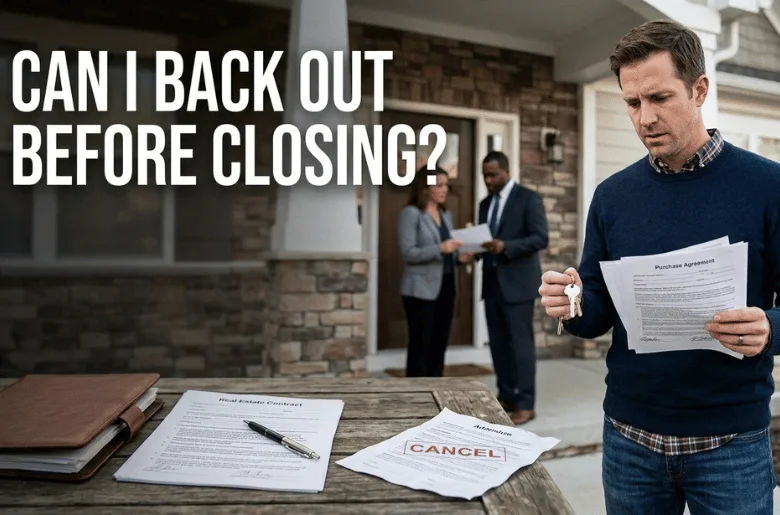
Yes, but once both sides have signed a purchase agreement, you usually cannot walk away simply because you changed your mind. If you’re asking, “Can I back out of selling my house before closing?” your options depend on the contract, seller-specific contingencies, the buyer’s performance, and state law.
A home sale can still end before closing for several lawful reasons. The key question is whether your contract gives you the right to terminate or whether the buyer has failed to perform.
| Situation | Can the seller usually cancel? | Main issue to check |
| The seller changes their mind | Usually not after signing | Contract termination rights |
| The seller receives a higher offer | Usually not for that reason alone | Existing contract and any kick-out clause |
| A written seller contingency applies | Possibly | Exact contingency terms and deadlines |
| The buyer breaches the agreement | Possibly | Default, notice, and cure provisions |
| Both parties agree to cancel | Often | Written mutual release |
| An inspection or appraisal problem arises | Not automatically | Which party holds the contingency |
For more information about home transactions and ownership issues, see Readrey’s Real Estate section.
The 5 Rules That Determine Whether a Seller Can Walk Away

1. A signed purchase agreement changes your options
Before a binding contract exists, a homeowner generally has much more freedom to stop negotiations.
Once both parties sign, the agreement can create enforceable obligations. A simple change of heart is usually not enough to cancel without risk. The same is generally true if another buyer later offers more money.
Your first step should be to read the signed contract rather than rely on general real estate advice.
2. A seller contingency usually must be in the contract
A seller may have an exit if the purchase agreement contains a contingency written for the seller’s benefit.
One example is a clause that makes the transaction contingent on the seller finding another home. Another is a properly drafted kick-out provision connected to a contingent offer. The wording and deadlines matter.
You should not assume that a protection exists simply because it is common in another state or another transaction.
3. A buyer’s breach can create termination rights
The buyer also has contractual obligations. The buyer may need to make deposits, obtain financing, provide documents, or meet other deadlines.
If the buyer defaults, the seller may have the right to terminate. However, many agreements include notice or cure requirements. That means the seller may need to give the buyer an opportunity to correct the breach first.
Have an attorney confirm that a genuine default has occurred before treating the deal as terminated.
4. A mutual release can be the cleanest exit
Sometimes neither side wants a legal dispute. The seller can ask the buyer to sign a written agreement ending the transaction. The parties may also need to address the buyer’s deposit, expenses, and any other disputed amounts.
A mutual termination is different from simply announcing that you will no longer close. Both parties must agree to its terms.
5. Seller’s remorse is not a contract clause
Personal circumstances can change quickly. You may decide the timing is wrong, dislike the sale price, or regret leaving the property.
Those feelings can be genuine, but they do not automatically create a contractual right to cancel.
This is why sellers should consider their moving plans, finances, replacement housing, and family circumstances before accepting an offer.
Can I Back Out of Selling My House Before Closing After I Sign?
Possibly, but signing is the point at which the legal risk usually becomes much greater.
Start with the termination, contingency, default, notice, and dispute sections of your purchase agreement. Some jurisdictions or contract forms may provide attorney-review periods, but those rules are not universal. You might also like How Much Does a Divorce Cost.
If no contractual exit applies and the buyer is performing as promised, canceling the sale may constitute a breach of contract.
A real estate agent can explain the transaction history and important deadlines. A local attorney can advise you about your rights under the contract and state law. Readrey’s Law section also covers broader legal topics for readers researching their options.
How Inspection, Appraisal, and Title Problems Affect the Sale
Sellers should not assume that every transaction problem creates an automatic way out.
- Inspection: An inspection contingency often protects the buyer. The buyer may request repairs, negotiate, or cancel in accordance with the agreement.
- Appraisal: A low appraisal often affects the buyer’s financing or appraisal contingency. It does not automatically give the seller a new right to cancel.
- Title: A title problem can delay or prevent closing if the seller cannot provide the title required by the contract.
The contract determines who has each right and what must happen next.
A deal can fail because a buyer validly exercises a contingency. That is different from the seller having an independent right to terminate.
What Can Happen If a Seller Breaches the Contract?
Canceling without a valid contractual or legal basis can create financial and legal exposure.
| Possible result | What it may mean |
| The buyer seeks damages | The buyer may claim qualifying financial losses |
| The buyer seeks specific performance | A court may be asked to order completion of the sale |
| A deposit dispute arises | The parties may need instructions or an agreement concerning escrowed funds |
| Transaction expenses become disputed | Inspection, appraisal, legal, or other costs may become part of the dispute |
| A broker dispute develops | The listing agreement may create separate commission issues |
Specific performance is a contract remedy that may require a party to perform a contractual obligation. In some real estate disputes, a buyer may ask a court to order the seller to complete the transaction. Whether that remedy is available depends on the contract, the facts, and applicable law.
Your purchase agreement is not the only document worth checking. Review your listing agreement as well. A dispute with the buyer and a separate dispute over broker compensation may involve different contract terms.
If the financial side of a sale is your concern, Readrey’s Finance section provides additional information.
What to Do Before Trying to Cancel a Home Sale
Do not send an emotional cancellation message before you understand the contract.
- Read the signed agreement. Find every clause covering contingencies, defaults, termination, notice, and dispute remedies.
- Write down the reason you want to cancel. Separate personal regret from a possible contractual basis for termination.
- Check the buyer’s performance. Confirm any missed deadlines or alleged breaches with documentation.
- Speak with your agent and a local real estate attorney. Ask what your contract and state law allow.
- Consider a negotiated release. The buyer may agree to end the transaction if both parties can agree on the terms.
- Get the cancellation in writing. Make sure any release also addresses deposits and remaining obligations.
Before trying to withdraw from a signed sale, review the contract carefully and obtain professional guidance.
The Safer Next Step
If you want to get out of a pending home sale, start with the contract instead of sending a cancellation notice.
Identify your reason, confirm whether a contingency or buyer default applies, and speak with a local real estate attorney. If no clear exit exists, ask whether a written mutual release is possible.
Ending a sale before closing may be possible when the agreement supports it. Walking away without first checking your obligations can turn a stressful transaction into a contract dispute.
Frequently Asked Questions
A change of mind alone usually does not entitle a seller to terminate a signed purchase agreement. Look for a valid contingency, buyer default, negotiated release, or another right recognized by the contract and applicable law.
Usually, a higher offer alone does not cancel an existing signed purchase agreement. A properly drafted kick-out clause may allow a seller to continue considering offers in certain contingent transactions. If such a clause applies, the seller must follow its terms carefully.
A missed deadline may constitute a default, but that depends on the agreement. Check whether the contract requires written notice or gives the buyer time to correct the problem. Do not assume that one missed deadline automatically ends the sale.
A buyer may seek specific performance in some contract disputes. This remedy asks a court to order the promised transaction rather than award only monetary damages.
Whether specific performance is available depends on the contract, the facts, applicable state law, and the circumstances of the case.
